

Episodes
Boeing 707
The Boeing 707 is an American long-range narrow-body airliner that was developed and produced by Boeing Commercial Airplanes, its first jetliner. Developed from the Boeing 367-80, a prototype first flown in 1954, the initial 707-120 first flew on December 20, 1957.
Boeing 747
The Boeing 747 is a large, long-range wide-body airliner designed and manufactured by Boeing Commercial Airplanes in the United States. After introducing the 707 in October 1958, Pan Am wanted a jet 2 1⁄2 times its size. With a ten-abreast economy seating, it typically accommodates 366 passengers in three travel classes.
Boeing B-17 Flying Fortress
The Boeing B-17 Flying Fortress is a four-engined heavy bomber developed in the 1930s for the United States Army Air Corps (USAAC). It was primarily employed by the USAAF in the daylight strategic bombing campaign of World War II against German industrial, military and civilian targets.
Boeing B-29 Superfortress
The Boeing B-29 Superfortress is an American four-engined propeller-driven heavy bomber designed by Boeing and flown primarily by the United States during World War II and the Korean War. One of the largest aircraft of World War II, the B-29 had state-of-the-art technology, including a pressurized cabin, dual-wheeled, tricycle landing gear, and an analog computer-controlled fire-control system that allowed one gunner and a fire-control officer to direct four remote machine gun turrets.
Boeing B-52 Stratofortress
The Boeing B-52 Stratofortress (also known as the "BUFF") is an American long-range, subsonic, jet-powered strategic bomber. The B-52 was designed and built by Boeing, which has continued to provide support and upgrades. It has been operated by the United States Air Force (USAF) since the 1950s.
British Aerospace/McDonnell Douglas Harrier
The Harrier, informally referred to as the Harrier Jump Jet, is a family of jet-powered attack aircraft capable of vertical/short takeoff and landing operations (V/STOL).
Consolidated B-24 Liberator
The B-24 was used extensively in World War II. It served in every branch of the American armed forces as well as several Allied air forces and navies. It saw use in every theater of operations. Along with the B-17, the B-24 was the mainstay of the US strategic bombing campaign in the Western European theater.
Consolidated PBY Catalina
The Consolidated PBY Catalina is a flying boat and amphibious aircraft that was produced in the 1930s and 1940s. It was one of the most widely used seaplanes of World War II. Catalinas served with every branch of the United States Armed Forces and in the air forces and navies of many other nations.
Convair B-36 Peacemaker
The Convair B-36 "Peacemaker" is a strategic bomber built by Convair and operated by the United States Air Force (USAF) from 1949 to 1959. The B-36 is the largest mass-produced piston-engined aircraft ever built.
Douglas A-1 Skyraider
The Douglas A-1 Skyraider (formerly known as AD Skyraider) is an American single-seat attack aircraft in service from 1946 to the early 1980s. The Skyraider had a remarkably long and successful career; it became a piston-engined anachronism in the jet age, and was nicknamed "Spad", after the French World War I fighter.
Douglas A-4 Skyhawk
The Douglas A-4 Skyhawk is a single-seat subsonic carrier-capable light attack aircraft developed for the United States Navy and United States Marine Corps in the early 1950s. The delta-winged, single turbojet engined Skyhawk was designed and produced by Douglas Aircraft Company, and later by McDonnell Douglas.
Douglas A-26 Invader
The Douglas A-26 Invader (designated B-26 between 1948 and 1965) is an American twin-engined light bomber and ground attack aircraft. Built by Douglas Aircraft Company during World War II, the Invader also saw service during several major Cold War conflicts.
Douglas C-47 Dakota
The Douglas C-47 Skytrain or Dakota is a military transport aircraft developed from the civilian Douglas DC-3 airliner. It was used extensively by the Allies during World War II and remained in front-line service with various military operators for many years.
General Dynamics F-16 Fighting Falcon
The General Dynamics F-16 Fighting Falcon (referred to as the "Viper" by its crew) is a single-engine multirole fighter aircraft originally developed by General Dynamics for the United States Air Force (USAF). Designed as an air superiority day fighter, it evolved into a successful all-weather multirole aircraft.
General Dynamics F-111 Aardvark
The General Dynamics F-111 Aardvark is a retired supersonic, medium-range, multirole combat aircraft. Production variants of the F-111 had roles that included ground attack (e.g. interdiction), strategic bombing (including nuclear weapons capabilities), reconnaissance and electronic warfare.
Grumman F-14 Tomcat
The Grumman F-14 Tomcat is an American carrier-capable supersonic, twin-engine, two-seat, twin-tail, variable-sweep wing fighter aircraft. First flown on 21 December 1970, the F-14 served as the U.S. Navy's primary maritime air superiority fighter, fleet defense interceptor, and tactical aerial reconnaissance platform into the 2000s.
Grumman F4F Wildcat/F6F Hellcat
The Grumman F4F Wildcat is an American carrier-based fighter aircraft that entered service in 1940 with the United States Navy. The Grumman F6F Hellcat is an American carrier-based fighter aircraft of World War II. Designed to replace the earlier F4F Wildcat and to counter the Japanese Mitsubishi A6M Zero, it was the United States Navy's dominant fighter in the second half of the Pacific War.
Lockheed Constellation
The Lockheed Constellation ("Connie") is a propeller-driven, four-engined airliner built by Lockheed Corporation starting in 1943. The Constellation series was the first pressurized-cabin civil airliner series to go into widespread use. Its pressurized cabin enabled commercial passengers to fly well above most bad weather for the first time, thus significantly improving the general safety and ease of air travel.
Lockheed C-130 Hercules
The Lockheed C-130 Hercules is an American four-engine turboprop military transport aircraft designed and built originally by Lockheed (now Lockheed Martin). Capable of using unprepared runways for takeoffs and landings, the C-130 was originally designed as a troop, medevac, and cargo transport aircraft. The versatile airframe has found uses in a variety of other roles, including as a gunship (AC-130), for airborne assault, search and rescue, scientific research support, weather reconnaissance, aerial refueling, maritime patrol, and aerial firefighting. It is now the main tactical airlifter for many military forces worldwide.
Lockheed F-104 Starfighter
The Lockheed F-104 Starfighter is a single-engine, supersonic interceptor aircraft which was extensively deployed as a fighter-bomber during the Cold War. Created as a day fighter by Lockheed as one of the Century Series of fighter aircraft for the United States Air Force (USAF), it was developed into an all-weather multirole aircraft in the early 1960s and produced by several other nations, seeing widespread service outside the United States.
Lockheed P-38 Lightning
The Lockheed P-38 Lightning is an American single-seated, twin piston-engined fighter aircraft that was used during World War II. Developed for the United States Army Air Corps by the Lockheed Corporation, the P-38 incorporated a distinctive twin-boom design with a central nacelle containing the cockpit and armament. Along with its use as a general fighter, the P-38 was used in various aerial combat roles, including as a highly effective fighter-bomber, a night fighter, and a long-range escort fighter when equipped with drop tanks.
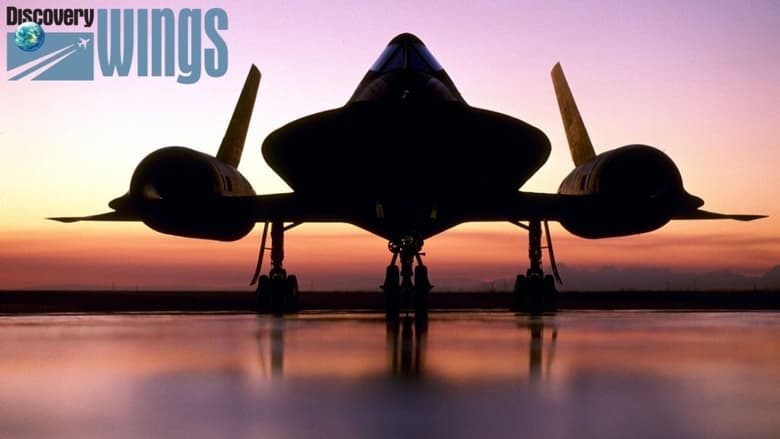
Lockheed SR-71 Blackbird
The Lockheed SR-71 "Blackbird" is a long-range, high-altitude, Mach 3+ strategic reconnaissance aircraft developed and manufactured by the American aerospace company Lockheed Corporation. It was operated by both the United States Air Force (USAF) and NASA. It was developed as a black project from the Lockheed A-12 reconnaissance aircraft during the 1960s by Lockheed's Skunk Works division.
Martin B-26 Marauder
The Martin B-26 Marauder is an American twin-engined medium bomber that saw extensive service during World War II. The B-26 was built at two locations: Baltimore, Maryland, and Omaha, Nebraska, by the Glenn L. Martin Company. First used in the Pacific Theater of World War II in early 1942, it was also used in the Mediterranean Theater and in Western Europe.
Martin B-57 Canberra
The Martin B-57 Canberra is an American-built, twin-engined tactical bomber and reconnaissance aircraft that entered service with the United States Air Force (USAF) in 1953. Used extensively during the Vietnam War, The B-57 Canberra holds the distinction of being the first jet bomber in U.S. service to drop bombs during combat.
McDonnell Douglas F-4 Phantom II
The McDonnell Douglas F-4 Phantom II is an American tandem two-seat, twin-engine, all-weather, long-range supersonic jet interceptor and fighter-bomber originally developed by McDonnell Aircraft for the United States Navy. The F-4 was used extensively during the Vietnam War. It served as the principal air superiority fighter for the U.S. Air Force, Navy, and Marine Corps and became important in the ground-attack and aerial reconnaissance roles late in the war.
McDonnell Douglas F-15 Eagle
The McDonnell Douglas F-15 Eagle is an American twin-engine, all-weather tactical fighter aircraft designed by McDonnell Douglas (now part of Boeing). The Eagle first flew in July 1972 and entered service in 1976. It is among the most successful modern fighters, with over 100 victories and no losses in aerial combat, with the majority of the kills by the Israeli Air Force. The aircraft design proved flexible enough that an improved all-weather strike derivative, the F-15E Strike Eagle, was later developed, entered service in 1989 and has been exported to several nations.
McDonnell Douglas F/A-18 Hornet
The McDonnell Douglas F/A-18 Hornet is a twin-engine, supersonic, all-weather, carrier-capable, multirole combat jet, designed as both a fighter and attack aircraft (hence the F/A designation). Designed by McDonnell Douglas (now part of Boeing) and Northrop (now part of Northrop Grumman), the F/A-18 was derived from the latter's YF-17 in the 1970s for use by the United States Navy and Marine Corps. The Hornet is also used by the air forces of several other nations, and by the U.S. Navy's Flight Demonstration Squadron, the Blue Angels. Designed to be a highly versatile aircraft due to its avionics, cockpit displays, and excellent aerodynamic characteristics, with the ability to carry a wide variety of weapons, the aircraft can perform fighter escort, fleet air defense, suppression of enemy air defenses, air interdiction, close air support, and aerial reconnaissance. Its versatility and reliability have proven it to be a valuable carrier asset.
North American B-25 Mitchell
The North American B-25 Mitchell is an American medium bomber that was introduced in 1941 and named in honor of Major General William "Billy" Mitchell, a pioneer of U.S. military aviation. Used by many Allied air forces, the B-25 served in every theater of World War II, and after the war ended, many remained in service, operating across four decades.
North American F-86 Sabre
The North American F-86 Sabre, sometimes called the Sabrejet, is a transonic jet fighter aircraft. Produced by North American Aviation, the Sabre is best known as the United States' first swept-wing fighter that could counter the swept-wing Soviet MiG-15 in high-speed dogfights in the skies of the Korean War (1950–1953), fighting some of the earliest jet-to-jet battles in history. Considered one of the best and most important fighter aircraft in that war, the F-86 is also rated highly in comparison with fighters of other eras. Although it was developed in the late 1940s and was outdated by the end of the 1950s, the Sabre proved versatile and adaptable and continued as a front-line fighter in numerous air forces.
North American F-100 Super Sabre
The North American F-100 Super Sabre is an American supersonic jet fighter aircraft that served with the United States Air Force (USAF) from 1954 to 1971 and with the Air National Guard (ANG) until 1979. The first of the Century Series of USAF jet fighters, it was the first USAF fighter capable of supersonic speed in level flight. The F‑100 was designed by North American Aviation as a higher-performance follow-on to the F-86 Sabre air-superiority fighter. Adapted as a fighter-bomber, the F-100 was superseded by the high-speed Republic F-105 Thunderchief for strike missions over North Vietnam. The F‑100 flew extensively over South Vietnam as the air force's primary close air-support jet until being replaced by the more efficient subsonic LTV A-7 Corsair II.
North American P-51 Mustang
The North American Aviation P-51 Mustang is an American long-range, single-seat fighter and fighter-bomber used during World War II and the Korean War, among other conflicts. The P-51 was used by Allied air forces in the North African, Mediterranean, Italian, and Pacific theaters. During World War II, Mustang pilots claimed to have destroyed 4,950 enemy aircraft.
North American XB-70 Valkyrie
The North American Aviation XB-70 Valkyrie was the prototype version of the planned B-70 nuclear-armed, deep-penetration supersonic strategic bomber for the United States Air Force Strategic Air Command. Designed in the late 1950s by North American Aviation (NAA), the six-engined Valkyrie was capable of cruising for thousands of miles at Mach 3+ while flying at 70,000 feet (21,000 m).
Northrop F-5 Freedom Fighter
The Northrop F-5 is a family of supersonic light fighter aircraft initially designed as a privately funded project in the late 1950s by Northrop Corporation. There are two main models, the original F-5A and F-5B Freedom Fighter variants and the extensively updated F-5E and F-5F Tiger II variants. Smaller and simpler than contemporaries such as the McDonnell Douglas F-4 Phantom II, the F-5 cost less to procure and operate, making it a popular export aircraft. Though primarily designed for a day air superiority role, the aircraft is also a capable ground-attack platform. The F-5A entered service in the early 1960s. During the Cold War, over 800 were produced through 1972 for U.S. allies. Though at the time the United States Air Force (USAF) did not have a need for a light fighter, it did procure approximately 1,200 Northrop T-38 Talon trainer aircraft, which was based on Northrop's N-156 fighter design.
Republic F-84 Thunderjet
The Republic F-84 Thunderjet was an American turbojet fighter-bomber aircraft. Originating as a 1944 United States Army Air Forces (USAAF) proposal for a "day fighter", the F-84 first flew in 1946. The Thunderjet became the USAF's primary strike aircraft during the Korean War, flying 86,408 sorties and destroying 60% of all ground targets in the war as well as eight Soviet-built MiG fighters. Over half of the 7,524 F-84s produced served with NATO nations, and it was the first aircraft to fly with the U.S. Air Force Thunderbirds demonstration team. The USAF Strategic Air Command had F-84 Thunderjets in service from 1948 through 1957.
Republic F-105 Thunderchief
The Republic F-105 Thunderchief is an American supersonic fighter-bomber used by the United States Air Force. Capable of Mach 2, it conducted the majority of strike bombing missions during the early years of the Vietnam War; it was the only American aircraft to have been removed from combat due to high loss rates. It was originally designed as a single-seat, nuclear-attack aircraft; a two-seat Wild Weasel version was later developed for the specialized Suppression of Enemy Air Defenses (SEAD) role against surface-to-air missile sites. The F-105 was commonly known as the "Thud" by its crews.
Republic P-47 Thunderbolt
The Republic P-47 Thunderbolt is a World War II-era fighter aircraft produced by the American aerospace company Republic Aviation from 1941 through 1945. Its primary armament was eight .50-caliber machine guns, and in the fighter-bomber ground-attack role it could carry 5-inch rockets or a bomb load of 2,500 lb (1,100 kg). When fully loaded, the P-47 weighed up to 8 tons, making it one of the heaviest fighters of the war.
Rockwell B-1 Lancer
The Rockwell B-1 Lancer is a supersonic variable-sweep wing, heavy bomber used by the United States Air Force. It is commonly called the "Bone" (from "B-One").
Vought A-7 Corsair II
The LTV A-7 Corsair II is an American carrier-capable subsonic light attack aircraft designed and manufactured by Ling-Temco-Vought (LTV). The A-7 was developed during the early 1960s as replacement for the Douglas A-4 Skyhawk. Its design was derived from the Vought F-8 Crusader; in comparison with the F-8, the A-7 is both smaller and restricted to subsonic speeds, its airframe being simpler and cheaper to produce. Following a competitive bid by Vought in response to the United States Navy's (USN) VAL (Heavier-than-air, Attack, Light) requirement, an initial contract for the type was issued on 8 February 1964. Development was rapid, first flying on 26 September 1965 and entering squadron service with the USN on 1 February 1967; by the end of that year, A-7s were being deployed overseas for the Vietnam War.
Vought F4U Corsair
The Vought F4U Corsair is an American fighter aircraft which saw service primarily in World War II and the Korean War. It was designed and operated as a carrier-based aircraft, and entered service in large numbers with the U.S. Navy in late 1944 and early 1945. It quickly became one of the most capable carrier-based fighter-bombers of World War II.
Drones, Midgets and Mutations
From the German SC-1262, a 1930s drone controlled by wires connected to a telephone, and Hitler's ominous V-1 to ultra-lights and one-man rocket packs, this episode recounts some of the most outlandish - and innovative - aviation creations. Drones include radio-controlled air vehicles and aerial torpedo "bugs." Mutants fulfill secondary purposes. Pint-sized experimentals like midgets are also remembered.
Parasites
Parasites represent enormous technological breakthroughs. In the beginning, Curtis fighters hid inside dirigibles. Later, parasite aircraft launched out of giant bombers to protect the plane. Now, the space shuttle itself counts as a parasite.
Eyes in the Sky
Takes a look at the people behind covert operations and the inventions that hid in the clouds - from the observation balloons of the Civil War to modern electronic surveillance aircraft like the U2, AWACS, spy satellites, and the SR71 "Blackbird."
Giants
Traces the story of aviation's most mammoth aircraft. Built for civil and and military uses, these amazing planes stun the imagination with their vast size. With names such as 'Fat Albert' and 'Pregnant Guppies' these giants of the skies rank with the world's strangest aircraft. From dirigibles like the Hindenberg and Howard Hughes' Spruce Goose, touching all the major milestones along the way, up to the B36, B52, and B1 bombers; the C5 Galaxy; and the U.S.S.R.'s giant AN 124.
Vertical
Tells the fascinating story of attempts to design airplanes that could be launched straight up into the air. From the Bell XV3 and XV15 to the Hawker and Harrier, a recounting of the planes that leap into the sky without a runway - and some that were supposed to but didn't.
Strange Shapes
Eliminating the fuselage on aircraft was an idea that never came to fruition, but it gave rise to a smaller, more aerodynamic design: the Flying Wing. Seen in the 1929 Halten Meteor to the modern-day Stealth Bomber, this smooth design featured backward wings, moving wings, small wings and even no wings at all; backward engines that "pushed" instead of "pulled"; engines that both pushed and pulled; huge tails and no tails. Aircraft seen include the Bell X5, XP 57 "Bat", SR71 Blackbird, F7 Cutlass, "Lifting Bodies", X24 and X29.
Canards and Pusher Propellers
First Strike
The run-up to and beginning of Operation Desert Storm (McDonnell-Douglas F-15 Eagle/Lockheed F-117 Nighthawk)
In Harm's Way
The air war over Iraq at the height of Operation Desert Storm (Panavia Tornado/Grumman A-6 Intruder)
The Final Assault
The final days of Desert Storm, including the ground war and the liberation of Kuwait (General Dynamics F-16 Fighting Falcon/Fairchild-Republic A-10 Thunderbolt II)
Nighthawk: Secrets of the Stealth
First ever behind-the-scenes look at the birth of the F-117 Stealth Fighter, including interviews with the airplane's designers, test pilots, first squadron and wing members, and the pilots who flew the famous missions into Baghdad during the Gulf War.
The Blitz
Focuses on the Arado Ar 234 Blitz (English: lightning), the world's first operational jet-powered bomber, built by the German Arado company during World War II.
The Butcher Bird
Focuses on the Focke-Wulf Fw 190 (nicknamed Würger; English: Shrike), a German single-seat, single-engine fighter aircraft designed by Kurt Tank at Focke-Wulf in the late 1930s and widely used during World War II. Along with its well-known counterpart, the Messerschmitt Bf 109, the Fw 190 became the backbone of the Jagdwaffe (Fighter Force) of the Luftwaffe. The twin-row BMW 801 radial engine that powered most operational versions enabled the Fw 190 to lift larger loads than the Bf 109, allowing its use as a day fighter, fighter-bomber, ground-attack aircraft and to a lesser degree, night fighter.
The Destroyer
Focuses on the Messerschmitt Bf 110, often known unofficially as the Me 110; a twin-engine Zerstörer (Destroyer, heavy fighter), fighter-bomber (Jagdbomber or Jabo), and night fighter (Nachtjäger) developed in Nazi Germany in the 1930s and used by the Luftwaffe during World War II.
Gigant
Focuses on the Messerschmitt Me 321 Gigant, a large German cargo glider developed and used during World War II. Intended to support large scale invasions, the Me 321 saw very limited use due to the low availability of suitable tug aircraft, high vulnerability whilst in flight and the difficult ground handling, both at base and at destination landing sites. The Me 321 was developed, in stages, into the six-engined Messerschmitt Me 323 Gigant, which removed some of the problems with ground handling, but vulnerability to ground fire and aerial attack remained a constant problem during operations of all variants.
Iron Annie
Focuses on the Junkers Ju 52/3m (nicknamed Tante Ju ("Aunt Ju") and Iron Annie), a transport aircraft that was designed and manufactured by German aviation company Junkers.
The Jet
Focuses on the Messerschmitt Me 262, nicknamed Schwalbe (German: "Swallow") in fighter versions, or Sturmvogel (German: "Storm Bird") in fighter-bomber versions, a German fighter aircraft and fighter-bomber that was the world's first operational jet-powered fighter aircraft. Design work started before World War II began, but problems with engines, metallurgy and top-level interference kept the aircraft from operational status with the Luftwaffe until mid-1944. The Me 262 was faster and more heavily armed than any Allied fighter, including the British jet-powered Gloster Meteor. One of the most advanced aviation designs in operational use during World War II, the Me 262's roles included light bomber, reconnaissance and experimental night fighter versions.
The Komet
Focuses on the Messerschmitt Me 163 Komet, a German interceptor aircraft designed for point-defence. It is the only operational rocket-powered fighter aircraft in history and the first piloted aircraft of any type to exceed 1,000 kilometres per hour (620 mph) in level flight. Designed by Alexander Lippisch, its performance and aspects of its design were unprecedented. In early July 1944, German test pilot Heini Dittmar reached 1,130 km/h (700 mph), an unofficial flight airspeed record unmatched by turbojet-powered aircraft until 1953.
The Legend
Focuses on the Messerschmitt Bf 109, a German World War II fighter aircraft that was, along with the Focke-Wulf Fw 190, the backbone of the Luftwaffe's fighter force.
The Schnell Bomber
Focuses on the Junkers Ju 88, a German World War II Luftwaffe twin-engined multirole combat aircraft. Junkers Aircraft and Motor Works (JFM) designed the plane in the mid-1930s as a so-called Schnellbomber ("fast bomber") that would be too fast for fighters of its era to intercept. It suffered from technical problems during its development and early operational periods but became one of the most versatile combat aircraft of the war. Like a number of other Luftwaffe bombers, it served as a bomber, dive bomber, night fighter, torpedo bomber, reconnaissance aircraft, heavy fighter and at the end of the war, as a flying bomb.
Sea Wings
Focuses on German Seaplanes of WWII.
The Secret Bomber
Focuses on the Heinkel He 111, a German bomber aircraft designed by Siegfried and Walter Günter at Heinkel Flugzeugwerke in 1934. Through development it was described as a "wolf in sheep's clothing". Due to restrictions placed on Germany after the First World War prohibiting bombers, it masqueraded as a civil airliner, although from conception the design was intended to provide the nascent Luftwaffe with a fast medium bomber.
The Stuka
Focuses on the Junkers Ju 87 or Stuka (from Sturzkampfflugzeug, "dive bomber"), a German dive bomber and ground-attack aircraft. Designed by Hermann Pohlmann, it first flew in 1935. The Ju 87 made its combat debut in 1937 with the Luftwaffe's Condor Legion during the Spanish Civil War of 1936-1939 and served in Axis forces in World War II (1939-1945).
V for Vengeance
Focuses on the V-1 flying bomb (German: Vergeltungswaffe 1 "Vengeance Weapon 1"); an early cruise missile and the only production aircraft to use a pulsejet for power.
The Backfire Bomber
Soviet supersonic bomber development, including the Tupolev Tu-22M 'Backfire' and the Tu-160 'Blackjack'
Duel over Korea
Development and career of the Mikoyan-Gurevich MiG-15 'Fagot'
The Flying Tank
The Ilyushin Il-2 (Cyrillic: Илью́шин Ил-2) Shturmovik (Cyrillic: Штурмови́к, Shturmovík) was a ground-attack aircraft produced by the Soviet Union in large numbers during the Second World War.
The Foxbat Deception
The Mikoyan-Gurevich MiG-25 (Russian: Микоян и Гуревич МиГ-25; NATO reporting name: Foxbat) is a supersonic interceptor and reconnaissance aircraft that is among the fastest military aircraft to enter service. Designed by the Soviet Union's Mikoyan-Gurevich bureau, it is one of the few combat aircraft built primarily using stainless steel. It was to be the last plane designed by Mikhail Gurevich, before his retirement.
The Great Patriotic War
History of the air war on the eastern front during World War II
The Last Generation
Late-model Soviet fighters, including the Mikoyan-Gurevich MiG-29 'Fulcrum' and the Sukhoi Su-27 'Flanker'
The Nuclear Bear
Development of long-range strategic bombers, including the Tupolev Tu-95 'Bear'
The Phantom's Foe
Supersonic fighter development leading to the Mikoyan-Gurevich MiG-21 'Fishbed'
Russian Giants
Giant Soviet transport aircraft leading up to the Antonov An-124 and Antonov An-225 Mriya
Soviet Rotors
Development of Soviet helicopters
Straight Up
Soviet Vertical Take-off aircraft, including the Yakovlev Yak-38 'Forger' and Yak-141 'Freestyle'
Supersonic Transport
Development of the Tupolev Tu-144
The Swing-Wing Solution
Development leading up to the Mikoyan-Gurevich MiG-23/Mikoyan MiG-27 'Flogger'
Intruder: Thunder from the Sea
The Grumman A-6 Intruder is an American twinjet all-weather attack aircraft developed and manufactured by American aircraft company Grumman Aerospace and operated by the U.S. Navy and U.S. Marine Corps.
F9F Panther/Cougar
The Grumman F9F Panther is one of the United States Navy's first successful carrier-based jet fighters, as well as Grumman’s first jet fighter. A single-engined, straight-winged day fighter, it was armed with four 20 mm (0.79 in) cannons and could carry a wide assortment of air-to-ground munitions. The Grumman F9F/F-9 Cougar was a carrier-based fighter aircraft for the United States Navy and United States Marine Corps. Based on Grumman's earlier F9F Panther, the Cougar replaced the Panther's straight wing with a more modern swept wing. Thrust was also increased with the installation of a newer, more powerful engine. The Navy considered the Cougar an updated version of the Panther, despite having a different official name, and thus Cougars started off from F9F-6.
Tomcat: Defender of the Fleet
The Grumman F-14 Tomcat is an American carrier-capable supersonic, twin-engine, two-seat, twin-tail, variable-sweep wing fighter aircraft.
The Avenger
The Grumman TBF Avenger (designated TBM[1] for aircraft manufactured by General Motors) is an American World War II-era torpedo bomber developed initially for the United States Navy and Marine Corps, and eventually used by several air and naval aviation services around the world.
Orion: The Hunter
The Lockheed P-3 Orion is a four-engined, turboprop anti-submarine and maritime surveillance aircraft developed for the United States Navy and introduced in the 1960s. Lockheed based it on the L-188 Electra commercial airliner. The aircraft is easily distinguished from the Electra by its distinctive tail stinger or "MAD" boom, used for the magnetic anomaly detection (MAD) of submarines.
Viking: The Scout
The Lockheed S-3 Viking is a 4-crew, twin-engine turbofan-powered jet aircraft that was used by the U.S. Navy (USN) primarily for anti-submarine warfare. In the late 1990s, the S-3B's mission focus shifted to surface warfare and aerial refueling. The Viking also provided electronic warfare and surface surveillance capabilities to a carrier battle group. A carrier-based, subsonic, all-weather, long-range, multi-mission aircraft, it carried automated weapon systems and was capable of extended missions with in-flight refueling.
Hornet: The Killer Bee
The McDonnell Douglas F/A-18 Hornet is a twin-engine, supersonic, all-weather, carrier-capable, multirole combat jet, designed as both a fighter and attack aircraft (hence the F/A designation). Designed by McDonnell Douglas (now part of Boeing) and Northrop (now part of Northrop Grumman), the F/A-18 was derived from the latter's YF-17 in the 1970s for use by the United States Navy and Marine Corps. The Hornet is also used by the air forces of several other nations, and formerly, by the U.S. Navy's Flight Demonstration Squadron, the Blue Angels.
A-5 Vigilante
The North American A-5 Vigilante was an American carrier-based supersonic bomber designed and built by North American Aviation (NAA) for the United States Navy. Prior to 1962 unification of Navy and Air Force designations, it was designated the A3J Vigilante.
Super Etendard: The Falkland Surprise
The Dassault-Breguet Super Étendard (Étendard is French for "battle flag", cognate to English "standard") is a French carrier-borne strike fighter aircraft designed by Dassault-Breguet for service with the French Navy. Argentina's use of the Super Étendard and the Exocet missile during the 1982 Falklands War led to the aircraft gaining considerable popular recognition.
Crusader: Last of the Gunfighters
The Vought F-8 Crusader (originally F8U) is a single-engine, supersonic, carrier-based air superiority jet aircraft built by Vought for the United States Navy and United States Marine Corps (replacing the Vought F7U Cutlass), and for the French Navy. The first F-8 prototype was ready for flight in February 1955. The F-8 served principally in the Vietnam War. The Crusader was the last American fighter with guns as the primary weapon, earning it the title "The Last of the Gunfighters".
Dauphine: Wing of Mercy
The Eurocopter MH-65 Dolphin (Eurocopter AS365 Dauphin) is a twin-engined helicopter operated by the United States Coast Guard (USCG) for medevac-capable search and rescue (SAR) and armed Airborne Use of Force missions.
Hugging the Deck
Among the first in combat in Vietnam, the McDonnell Douglas A-4 Skyhawk flew more missions, and paid a higher price, than any other naval aircraft. It has been in service longer and seen more combat than any other fighter in America's arsenal. Like a super-charged sports car with wings, the Skyhawk endured a decade of fierce ground attack to become one America's longest-serving combat planes in operation today. In-between catapulting off the air craft carrier Oriskany and slamming down on its flight deck, Skyhawk pilots flew thousands of low-flying, ground-strike missions braving intense flak and enemy fire in support of beleaguered GIs. Get a first-hand aerial perspective on the Vietnam War from the fighter pilots, deck crews and commanders who were there. Experience dramatic tales of bravery and brutality from POWs, including retired admiral James Stockdale and U.S. Senator John McCain.
Steel Rain
The Fairchild Republic A-10 Thunderbolt II is a single-seat, twin-turbofan, straight-wing, subsonic attack aircraft developed by Fairchild Republic for the United States Air Force (USAF). In service since 1976, it is named for the Republic P-47 Thunderbolt, a World War II-era fighter-bomber effective at attacking ground targets, but commonly referred to as the "Warthog" or "Hog". The A-10 was designed to provide close air support (CAS) to friendly ground troops by attacking armored vehicles, tanks, and other enemy ground forces; it is the only production-built aircraft designed solely for CAS to have served with the U.S. Air Force. Its secondary mission is to direct other aircraft in attacks on ground targets, a role called forward air controller-airborne; aircraft used primarily in this role are designated OA-10.
Whispering Death
The Bell AH-1 Cobra is a single-engined attack helicopter developed and manufactured by the American rotorcraft manufacturer Bell Helicopter. A member of the prolific Huey family, the AH-1 is also referred to as the HueyCobra or Snake.
Guardians of the Night
The Boeing AH-64 Apache is an American twin-turboshaft attack helicopter with a tailwheel-type landing gear arrangement and a tandem cockpit for a crew of two. It features a nose-mounted sensor suite for target acquisition and night vision systems. It is armed with a 30 mm (1.18 in) M230 chain gun carried between the main landing gear, under the aircraft's forward fuselage, and four hardpoints mounted on stub-wing pylons for carrying armament and stores, typically a mixture of AGM-114 Hellfire missiles and Hydra 70 rocket pods. The AH-64 has significant systems redundancy to improve combat survivability.
Harrier
The McDonnell Douglas (now Boeing) AV-8B Harrier II is a single-engine ground-attack aircraft that constitutes the second generation of the Harrier Jump Jet family, capable of vertical or short takeoff and landing (V/STOL). The aircraft is primarily employed on light attack or multi-role missions, ranging from close air support of ground troops to armed reconnaissance. The AV-8B is used by the United States Marine Corps (USMC), the Spanish Navy, and the Italian Navy. A variant of the AV-8B, the British Aerospace Harrier II, was developed for the British military, while another, the TAV-8B, is a dedicated two-seat trainer.
Doomsday Mission
The Doomsday machine, a Cold War relic with the ability to deliver nuclear devices over the former Soviet Union without detection
Instant Thunder
The Boeing B-52 Stratofortress is an American long-range, subsonic, jet-powered strategic bomber. The B-52 was designed and built by Boeing, which has continued to provide support and upgrades. It has been operated by the United States Air Force (USAF) since the 1950s. The bomber is capable of carrying up to 70,000 pounds (32,000 kg) of weapons, and has a typical combat range of around 8,800 miles (14,080 km) without aerial refueling.
Eagles Over Lebanon
The McDonnell Douglas F-15 Eagle is an American twin-engine, all-weather tactical fighter aircraft designed by McDonnell Douglas (now part of Boeing). Following reviews of proposals, the United States Air Force selected McDonnell Douglas's design in 1969 to meet the service's need for a dedicated air superiority fighter. The Eagle first flew in July 1972, and entered service in 1976. It is among the most successful modern fighters, with over 100 victories and no losses in aerial combat, with the majority of the kills by the Israeli Air Force.
Flight of the Falcon
The General Dynamics F-16 Fighting Falcon is a single-engine multirole fighter aircraft originally developed by General Dynamics for the United States Air Force (USAF). Designed as an air superiority day fighter, it evolved into a successful all-weather multirole aircraft. Over 4,600 aircraft have been built since production was approved in 1976. Although no longer being purchased by the U.S. Air Force, improved versions are being built for export customers. In 1993, General Dynamics sold its aircraft manufacturing business to the Lockheed Corporation, which in turn became part of Lockheed Martin after a 1995 merger with Martin Marietta.
The Thud
The Republic F-105 Thunderchief is an American supersonic fighter-bomber used by the United States Air Force. Capable of Mach 2, it conducted the majority of strike bombing missions during the early years of the Vietnam War; it was the only American aircraft to have been removed from combat due to high loss rates. It was originally designed as a single-seat, nuclear-attack aircraft; a two-seat Wild Weasel version was later developed for the specialized Suppression of Enemy Air Defenses (SEAD) role against surface-to-air missile sites. The F-105 was commonly known as the "Thud" by its crews.
Bear Trap
The Mil Mi-24 (Russian: Миль Ми-24; NATO reporting name: Hind) is a large helicopter gunship, attack helicopter and low-capacity troop transport with room for eight passengers. It is produced by Mil Moscow Helicopter Plant and has been operated since 1972 by the Soviet Air Force and its successors, along with 48 other nations.
Flying Tank
The Sukhoi Su-25 Grach (Russian: Грач (rook); NATO reporting name: Frogfoot) is a subsonic, single-seat, twin-engine jet aircraft developed in the Soviet Union by Sukhoi. It was designed to provide close air support for Soviet Ground Forces. The first prototype made its maiden flight on 22 February 1975.
Spy Planes
For more than half a century, the CIA and U.S. military have relied on a sinister-looking black jet to go deep behind enemy lines for vital intelligence-gathering missions. The most famous aircraft projects are Lockheed's U-2 "Dragon Lady" and SR-71 "Blackbird" reconnaissance planes. During the early years of the Cold War, the most effective way to gather strategic intelligence about the Soviet Union and its allies was manned overflight. Lockheed's U-2 was spectacularly successful in this role. More than 50 years after its first flight in conditions of great secrecy, the Lockheed U-2 still flies valuable reconnaissance missions around the globe.
Landing Zone Vietnam
Meet the commanders of a true military legend and fight alongside the special breed of "madmen" who piloted the versatile olive drab chopper during the crucial battle in Landing Zone X-Ray. The UH-1 Huey, the most widely used military helicopter in the world, began to arrive in Vietnam in 1963. Before the conflict ended, more than 5,000 of these versatile machines were employed in Southeast Asia. The choppers were used for a variety of purposes, including MedEvac, command and control, air assault, transport of personnel and material, and as gun ships. This is an in-depth look at the role this helicopter played in Vietnam and how it came to symbolize the war itself. Meet the commanders of this military legend and hear gripping stories of the special breed of men who piloted Huey.
Flying Coffins
The Brewster F2A Buffalo is an American fighter aircraft which saw service early in World War II. Designed and built by the Brewster Aeronautical Corporation, it was one of the first U.S. monoplanes with an arrestor hook and other modifications for aircraft carriers. The Buffalo won a competition against the Grumman F4F Wildcat in 1939 to become the U.S. Navy's first monoplane fighter aircraft. Although superior to the Grumman F3F biplane it replaced, and the early F4Fs, the Buffalo was largely obsolete when the United States entered the war, being unstable and overweight, especially when compared to the Japanese Mitsubishi A6M Zero, the F2A-3 was derided by USMC pilots as a "flying coffin".
Red October
Profiles the Red October war game (October 2000) between US Navy F/A-18 Hornets and German MiG-29 Fulcrums over Laage, Germany.
Top Guns
Profile of American naval aviators and the Top Gun school.
Wings Over Europe: Target Berlin
Focuses on the P-51 over WWII Germany
Wings Over Europe: Dresden Firestorm
Focuses on the B-17 in the skies over Germany.
Wings Over Europe: The Valiant Few
Focuses on the Spitfire during the Battle of Britain
Wings Over the Pacific
Focuses on the planes of the Pacific Theater during WWII.
Wings Over Vietnam: The Cavalry
One of the great battlefield innovations developed by the United States armed forces in its effort to defeat a skilled and often elusive enemy in Vietnam was air cavalry--light infantry deployed by helicopters. Always outnumbered, and fighting in a totally hostile environment, American soldiers had to rely on technology and new techniques to contain the enemy. The highly mobile helicopter troops who formed the Air Cavalry used quick-response techniques to counter the huge odds against which they fought daily. As a concept, air cavalry was innovative. As executed by air cavalry units, it was phenomenal, and the 1st Cavalry Division in Vietnam was the quintessential air cavalry organization. Its prominent and evolving role began in the Ia Drang Valley in 1965, and one of its greatest achievements came at Khe Sanh in 1968.
Wings Over Vietnam: The Gunships
The conflict in Vietnam was often referred to as the Helicopter War. The helicopter played all sorts of roles during the Vietnam War, from transport and search-rescue to MEDEVAC and heavily armed gunships. Certainly, it was here that helicopters became most useful, but not only in what has previously been considered their only role as a transport vehicle. Before Vietnam, the helicopter was valued for its ability to evacuate wounded soldiers from trouble, but virtually ignored was its capabilities as an offensive weapon. The long war in Southeast Asia would see that change dramatically. Now they were developed into specialist fighting machines, carrying cannons and rockets.
The FACs
High technology did not play the major part in Southeast Asia that may have been expected. Rather, it was back to basics, the guerrilla activity of the Viet Cong produced a need for low flying, slow speed, durable aircraft for the Counter-Insurgency or COIN role. The Air Force created Foward Air Controllers (FACs) to guide and control air strikes on enemy positions In the jungles of Vietnam, flying in their light propeller-driven aircraft - 0-1 Bird Dogs and 0V-2 Skymasters until the purpose-designed aircraft, the twin engine Bronco, was rushed into service.
Dust Off
Drawing on its first experiments with helicopters in Korea, the Army in Vietnam came to rely almost entirely on the helicopter for medical evacuation. The Dust Off and Medevac helicopter ambulance units tested and perfected for medical use the Army's new helicopler, the UH-1 ("Huey" Iroquois), and developed several new devices, especially the hoist, that helped save thousands of American and allied lives between 1962 and 1973. The pilots of these helicopter ambulances displayed a courage and devotion to duty that earned them widespread respect from soldiers in Vietnam.
Rolling Thunder
Operation Rolling Thunder marked the first sustained American assault on North Vietnamese territory and thus represented a major expansion of U.S. involvement in the Vietnam War. In an effort to convince the North Vietnamese government to abandon its support of the insurgency in South Vietnam, President Johnson began a new bombing campaign in March 1965, known as Operation Rolling Thunder. Lasting from 2 March 1965 until 1 November 1968, Rolling Thunder was the longest bombing campaign in United States history. The massive Rolling Thunder offensive is recalled in interviews with the F-105 Thunderchief pilots, as well as Navy Yankee Station A-4 Skyhawk pilots.
The Jolly Greens
One of the most unsung heroes of the Southeast Asian War were Winch Men. Lowered from large camouflage helicopters into the tropical foliage, these "Green Giants" rescued fallen American pilots from the clutches of the Viet Cong. Each mission brought together new technology and human resourcefulness for one purpose: to "get the pilot out."
Spookies, Spectres, and Shadows
Benign aircraft has always proved useful for modification to the military. During the Southeast Asian War, such benign cargo planes were modified into some of the most extraordinary and destructive weapon systems of all time. The hastily improvised AC-47 "Spookies" roamed the night skies of South Vietnam, defending outposts against lethal enemy assaults with blazing fire from three side-mounted guns. The success of these makeshift gunships led to the creation of more sophisticated airborne predators, such as the AC-130. The airframe is manufactured by Lockheed Martin, while Boeing is responsible for the conversion into a gunship and for aircraft support. Developed during the Vietnam War as "Project Gunship II", the AC-130 replaced the Douglas AC-47 Spooky, or "Gunship I".
MiG Killers
In March 1965, U.S. air strikes into North Vietnam began. In April, the first dogfights took place. As the fighting grew into a major conflict, the air activity increased accordingly. At first the results were not encouraging for the U. S. Air Force. The most common problem found could be summed up in the words insufficient training and experience in air-to-air combat. But in 1972, when the "Top Gun" program improved the skills in aerial combat of USN Phantom pilots, and the F-4E appeared with a 20 mm built-in Vulcan cannon, could the US neutralize edge of the NVAF MiG-17, MiG-19 and MiG-21.
Wild Weasels
The constant threat to all American aircraft missions was the Russian built missile known as SAM, which employed various levels of sophistication. One counter action taken was the Wild Weasel mission: Weasel pilots would fly ahead of other aircraft, exposing themselves to enemy radar lock-on, so the Shrike missile they carried could use the same signal to target enemy ground-base, and thereby clear the way. The fascinating legend of Wild Weasel has never been told before today.
Linebacker II
Not since World War II had bombers been employed in an operation of this scope. All previous air campaigns, including the initial Linebacker carried out in May-October 1972, were "limited," designed to interdict the overland routes by which the North resupplied its regular units and Viet Cong forces operating in South Vietnam. Linebacker II was to be different. The intent was to destroy all major target complexes in the Hanoi and Haiphong areas, using an all-weather force of heavy B-52s and smaller F-111 attack aircraft by night while tactical aircraft would continue to press daytime attacks. The campaign unfolded over the 12-day period of December 18-29, 1972. After 11 days of bombing, Hanoi was ready for peace negotiations.
On the Step
In 1913, aviation pioneer Glenn Curtiss became the first to develop the flying boat. From the start, these large seaplanes surpassed land planes in both size and range. By 1920, they had become the first airliners, the first American aircraft to engage in combat and the first to conquer the Atlantic Ocean by air.
The Great Clippers
Learn how Pan American Airways' giant Clipper flying boats established the world's first air service across two oceans and offered passengers the ultimate in modern transportation. Juan Tripp's contribution to history is well documented with actual footage of the "China Clipper" and much more. To this day, these flying boats depict such romance and nostalgia unmatched by any land plane. Includes also rare footage of the Dornier DO X German Flying Boat.
The War Boats
From twin-engine patrol planes to six-engine bombers, flying boats offered versatility and mobility to combatants on both sides of World War II. Without these dependable work horses, the Allied forces might have lost the battle of the Atlantic as well as the Pacific island-hopping campaign.
The Giants
Just when post-war aviation had forsaken the large flying boat, three of the biggest ones ever built would make their debut. Howard Hughes' "Spruce Goose" and the British Princess were unfortunately doomed from the start, but the Martin "Mars" is still flying today as a converted water bomber used to fight forest fires.
The End of an Era
By the 1950s, flying boat operations in the United States Navy were in decline. Ironically, Navy planners began developing radical new designs including the jet-powered "Seamaster" and the supersonic "Sea Dart." In the end, however, these water-based aircraft could not compete with the obvious efficiency of traditional land planes.
The Final Frontier
Today, only Japan, Canada and Russia still produce large flying boats and seaplanes. Designed for special utility and military applications, these modern seaplanes have kept up with the advance of technology. In particular, the jet-powered Russian "Albatross" may lead a new generation of flying boats into the future.
Cast
Crew
Phil Osborn
Producer
Recommended

Info provided by The Movie Database. Watch sources provided by JustWatch.